
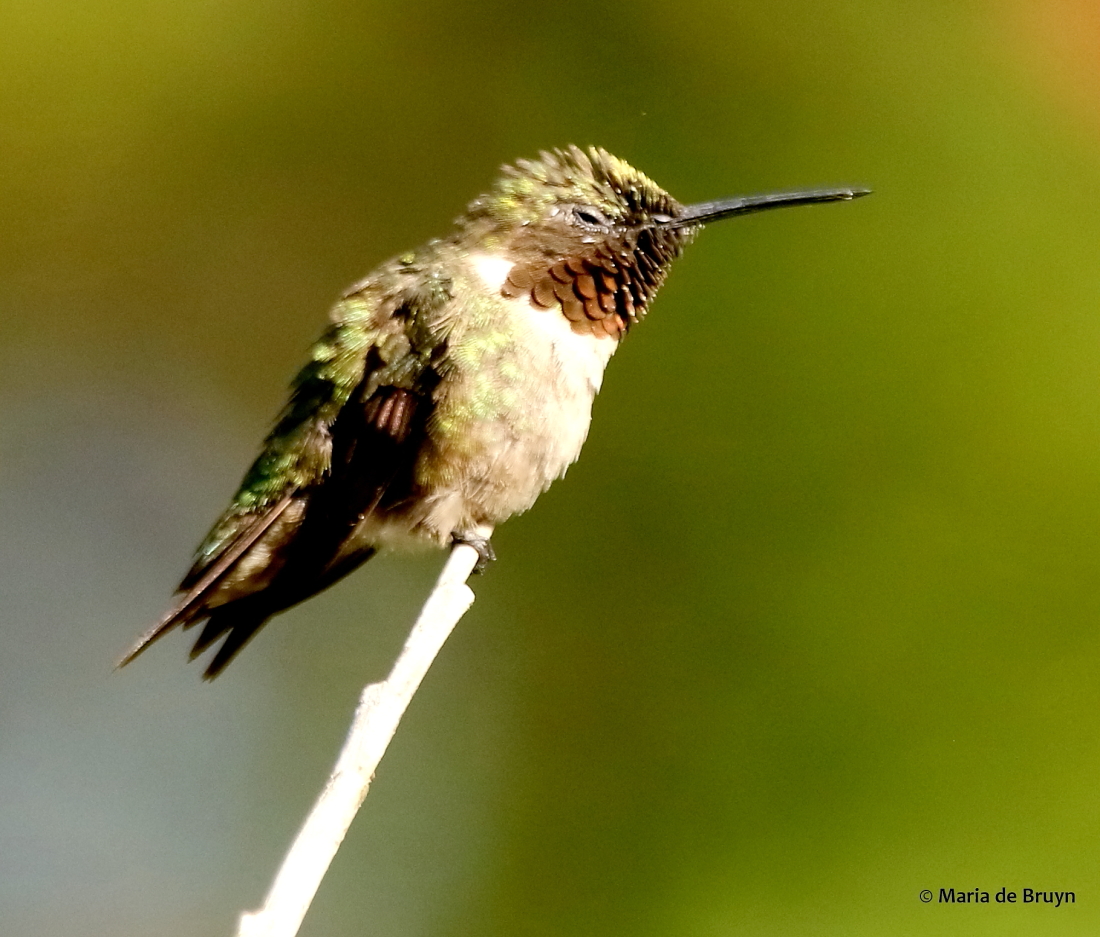
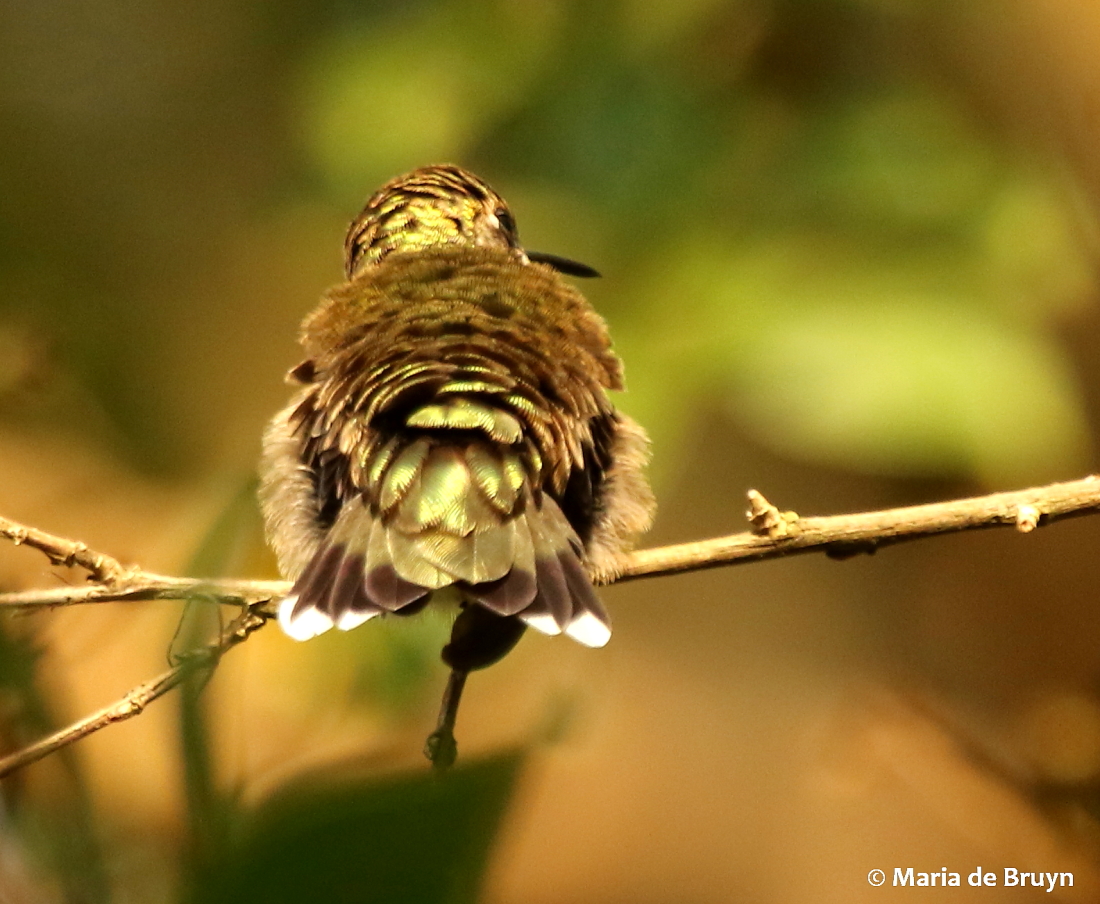
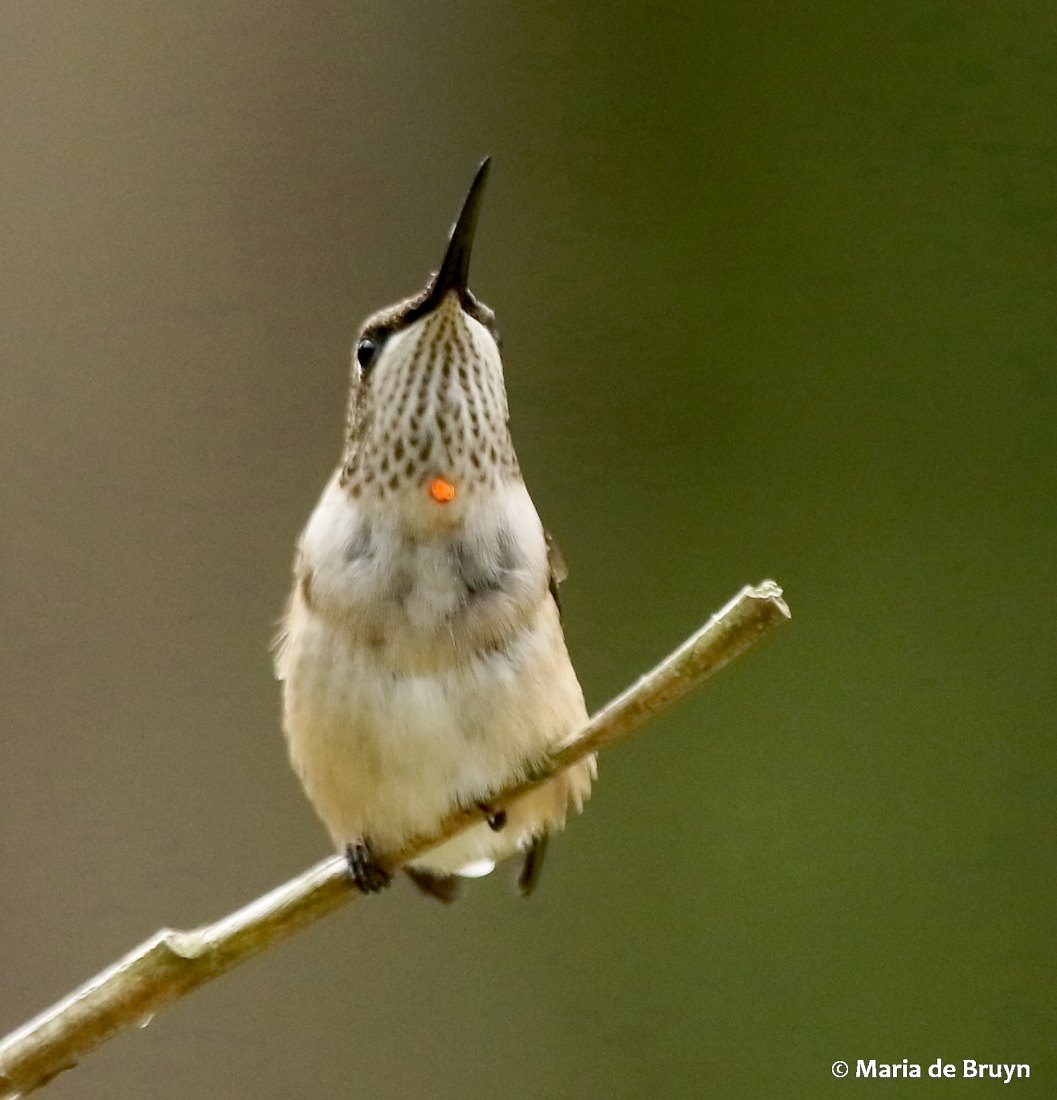
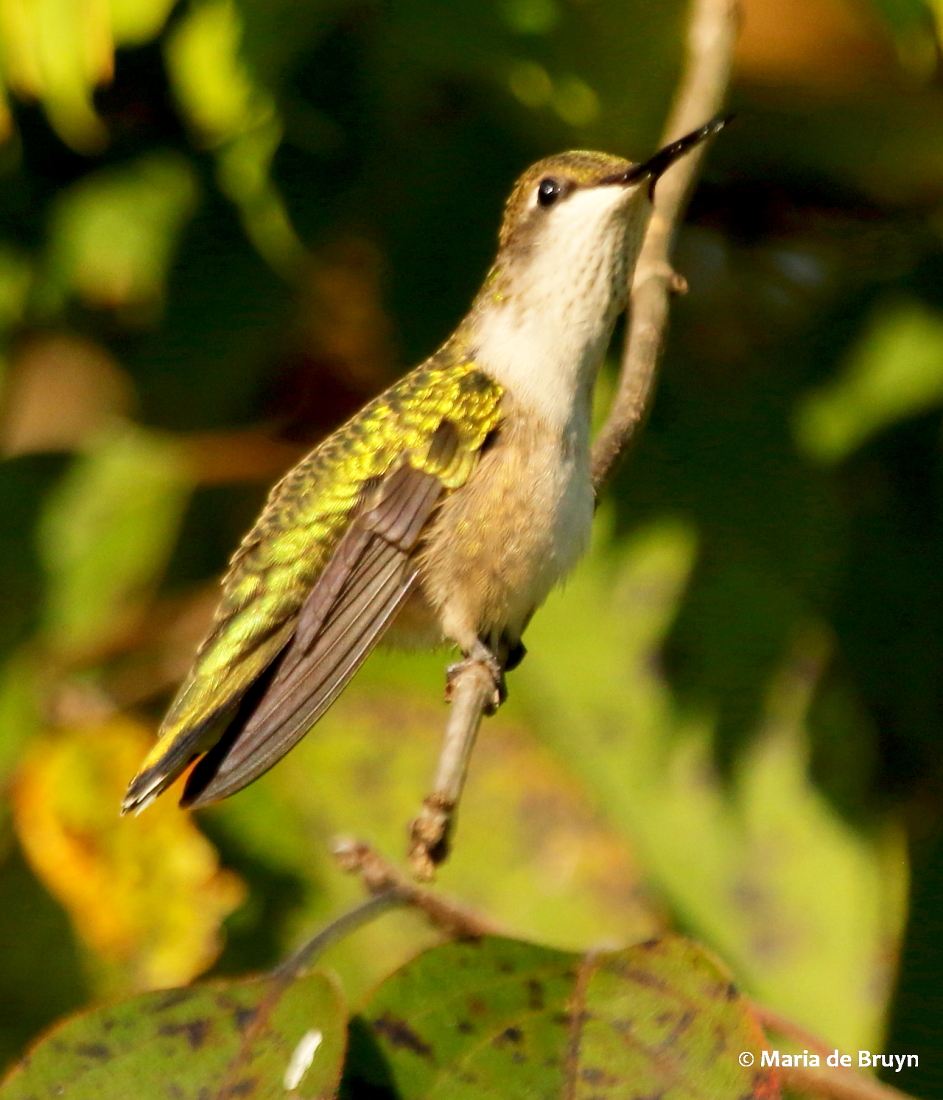
As promised, one more blog on hummingbirds before I move to another topic; their presence always brings me enjoyment and I know other people who are enamored with these tiny birds, too. Also, although autumn has come, I still have a couple ruby-throated hummingbirds (Archilochus colubris) at my feeders. And a couple days ago I had the privilege of seeing a species new to me, the buff-bellied hummingbird (Amazilia yucatanensis), which has only visited the state of North Carolina once before (at least as far as human witnesses are concerned)!
 The hummers have a varied diet, including mainly insects (mosquitoes, gnats, fruit flies, small bees), spiders, tree sap and sweet nectar (or sugar water). They tend to feed about 5-10 times per hour during the day and need about 10 calories of nutrition each day.
It is a lot easier to catch them drinking nectar than catching insects (apologies for the blurred photos)!


Hummingbirds use their long tubular tongues as elastic micro-pumps to obtain nectar. This enables them to lick a flower up to 20 times per second as they gather food. And although we can’t see it when just looking at them, they have forked tongues (like snakes)!


 The hummers visit a variety of flowers to drink their sweet nectar, often preferring orange or red flowers but certainly not avoiding others.In my garden, this includes cardinal flowers (Lobelia cardinalis), hollyhocks (Alcea), yellow passionflower (Passiflora lutea) and lantana (Lantana).


In nature reserves, I’ve seen them visiting morning glories (Ipomoea), ironweed (Vernonia) and trumpet vines (Campsis radicans).


Their long bills, tubular tongues and slim bodies make it easy for them to drink from long flowers, but sometimes they will simply pierce the base of a flower to obtain nectar, or use a hole already made there by an insect.


Light-colored flowers are not shunned as food sources, however!


Bean plants and gerbera daisies (Gerbera) were on the menu at the Translating Traditions farm.


At my house, the hummers visit the nectar feeders with great regularity, presumably because the food is very easily available there. A little known fact about the hummingbirds is that, compared to all other birds, their brains are the largest in comparison to body size. They remember where feeders are from year to year and also can recognize the people who fill the feeders. When the nectar is low and I appear, a hummer will sometimes hover and chitter in my direction at length; I really do think it is warning me that it’s time to prepare another serving.

The buff-bellied hummingbird breeds in Mexico and south Texas. When they migrate, it is in a north-eastern direction, but the only previous recorded visit of one to North Carolina was in 2007. Now there is one hanging out at a couple’s home in the town of Winston-Salem, so I accompanied three fellow birders to go see it. Our 90-minute drive there was rewarded by a view of the bird within about 15 minutes and we stayed for almost two hours watching it come and go along with some ruby-throated hummingbirds.

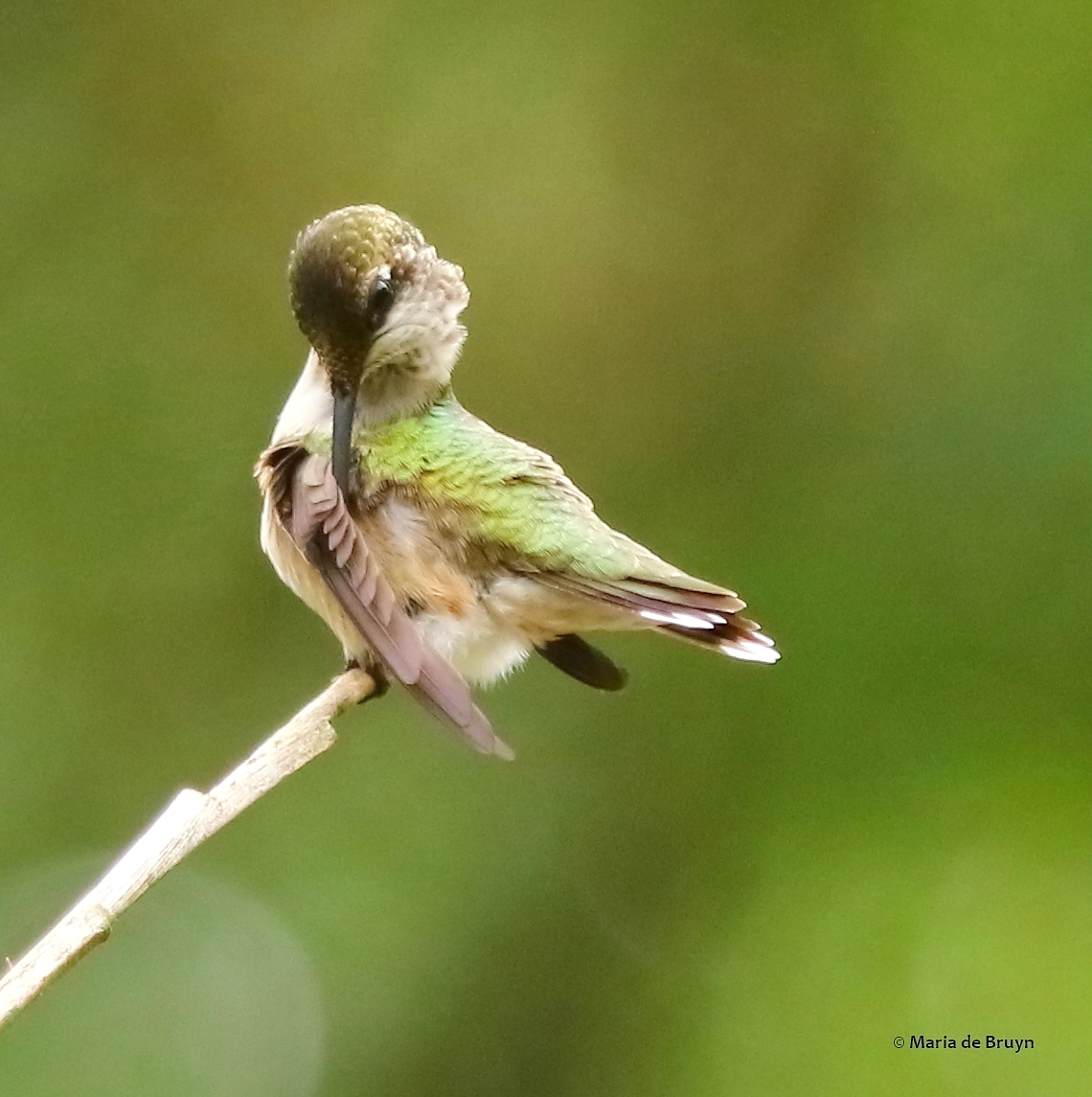
These hummingbirds have bellies with a light orange-yellow hue, brighter orange tail feathers and a bright green back and head. In contrast to the ruby-throated hummingbird’s straight dark bill, they have a reddish, curved bill. These lovely little birds appear to be the least studied species among the hummingbirds in the USA.

Two years ago, I had a rufous hummingbird (Selasphorus rufus) visit my nectar feeder after he had migrated here in winter from the far North. This year, I’ll leave at least one feeder up again after the ruby-throats take off for warmer climes in case some wintering hummers need food. And I’ll look forward to seeing my regular residents again next summer!
More information:
http://www.livescience.com/51904-hummingbird-tongue-pump.html
http://www.nytimes.com/2015/09/08/science/the-hummingbirds-tongue-how-it-works.html?_r=0

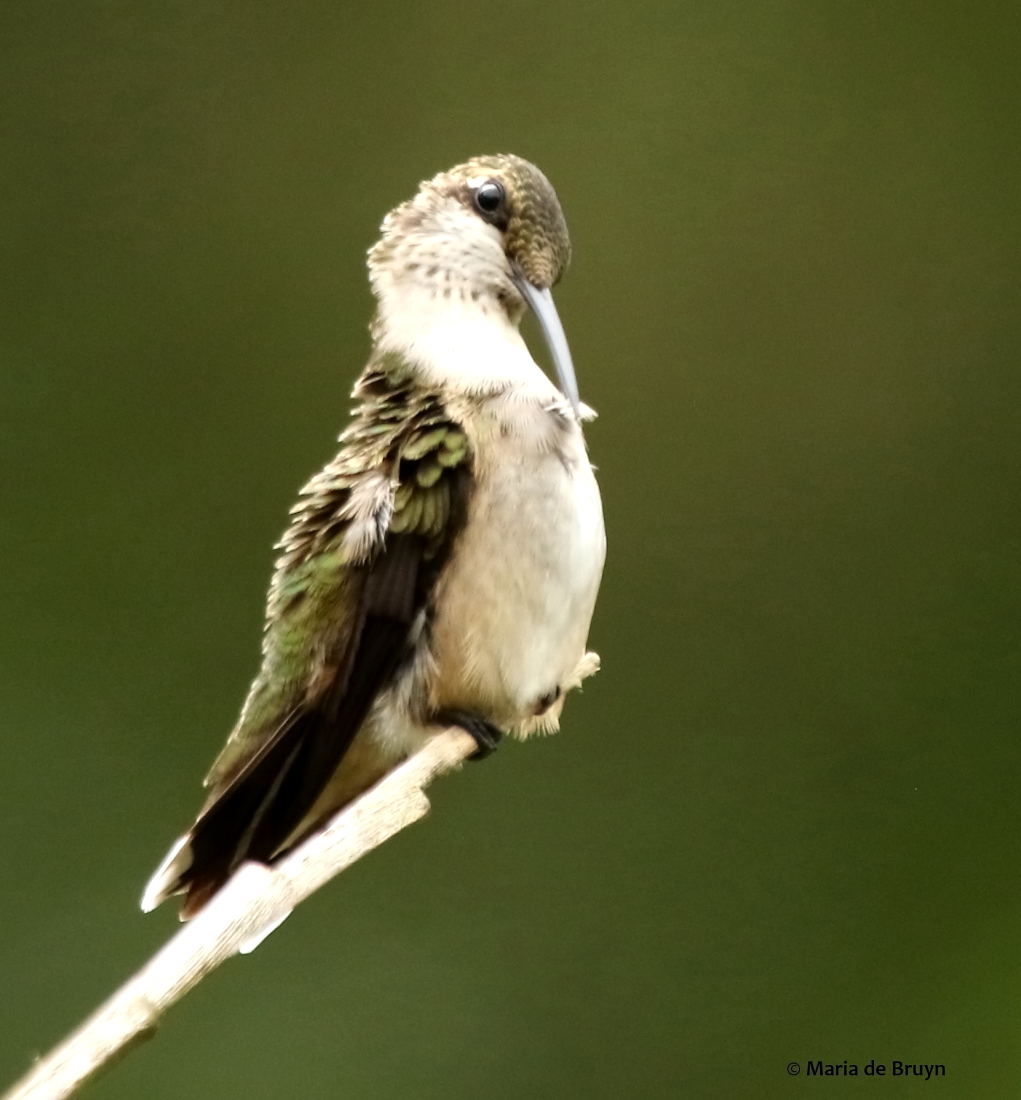


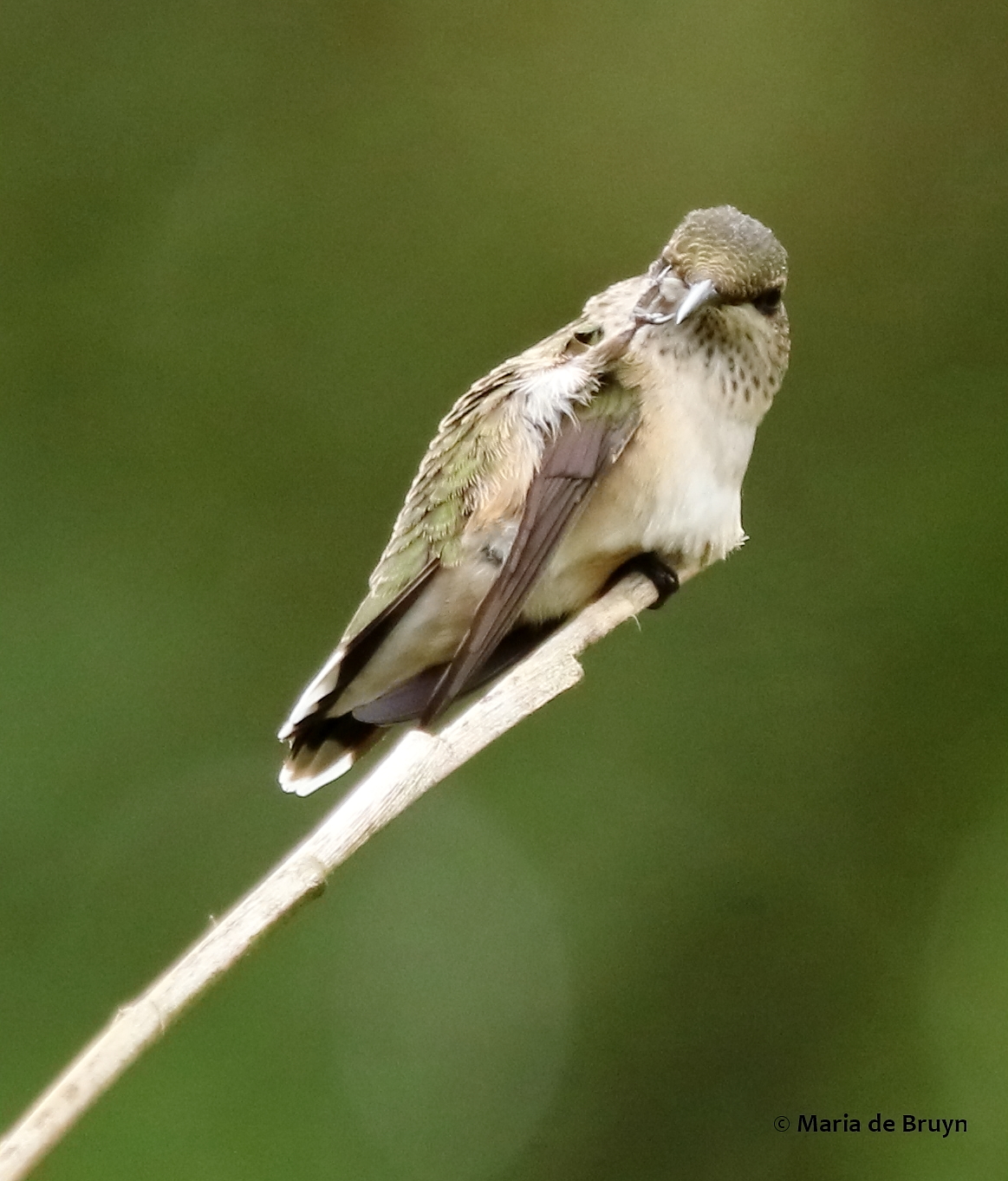

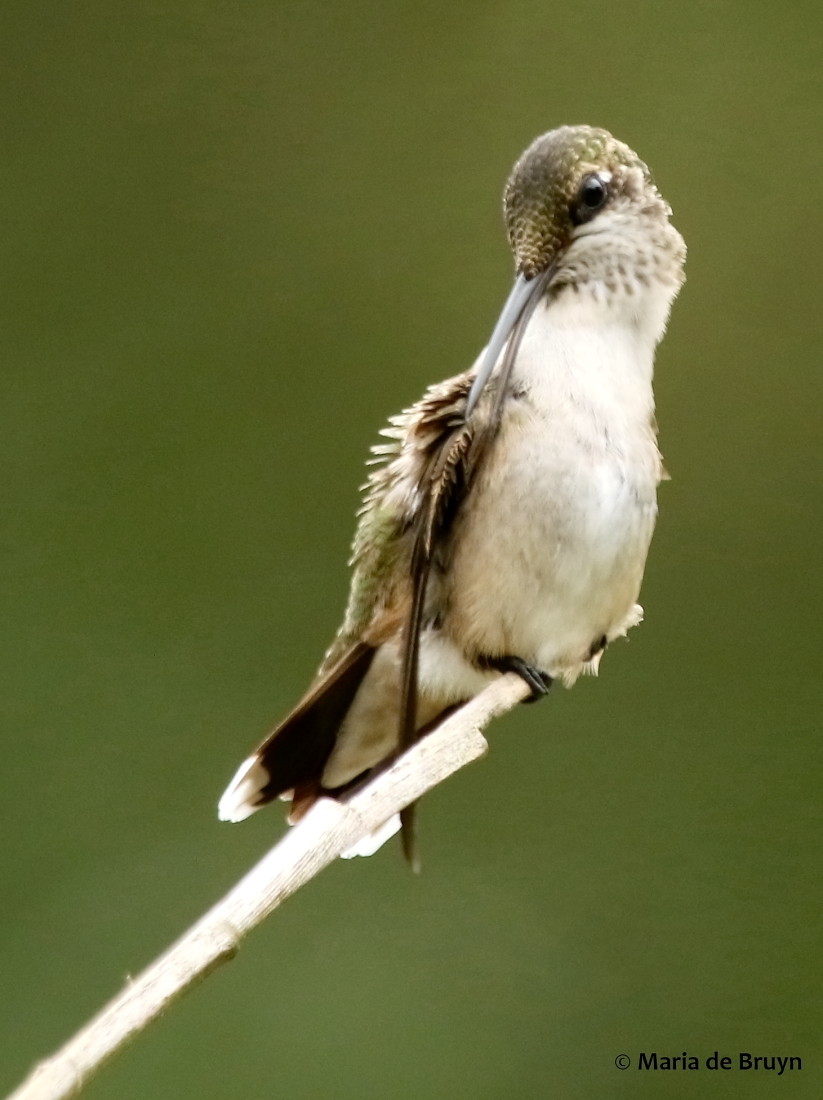









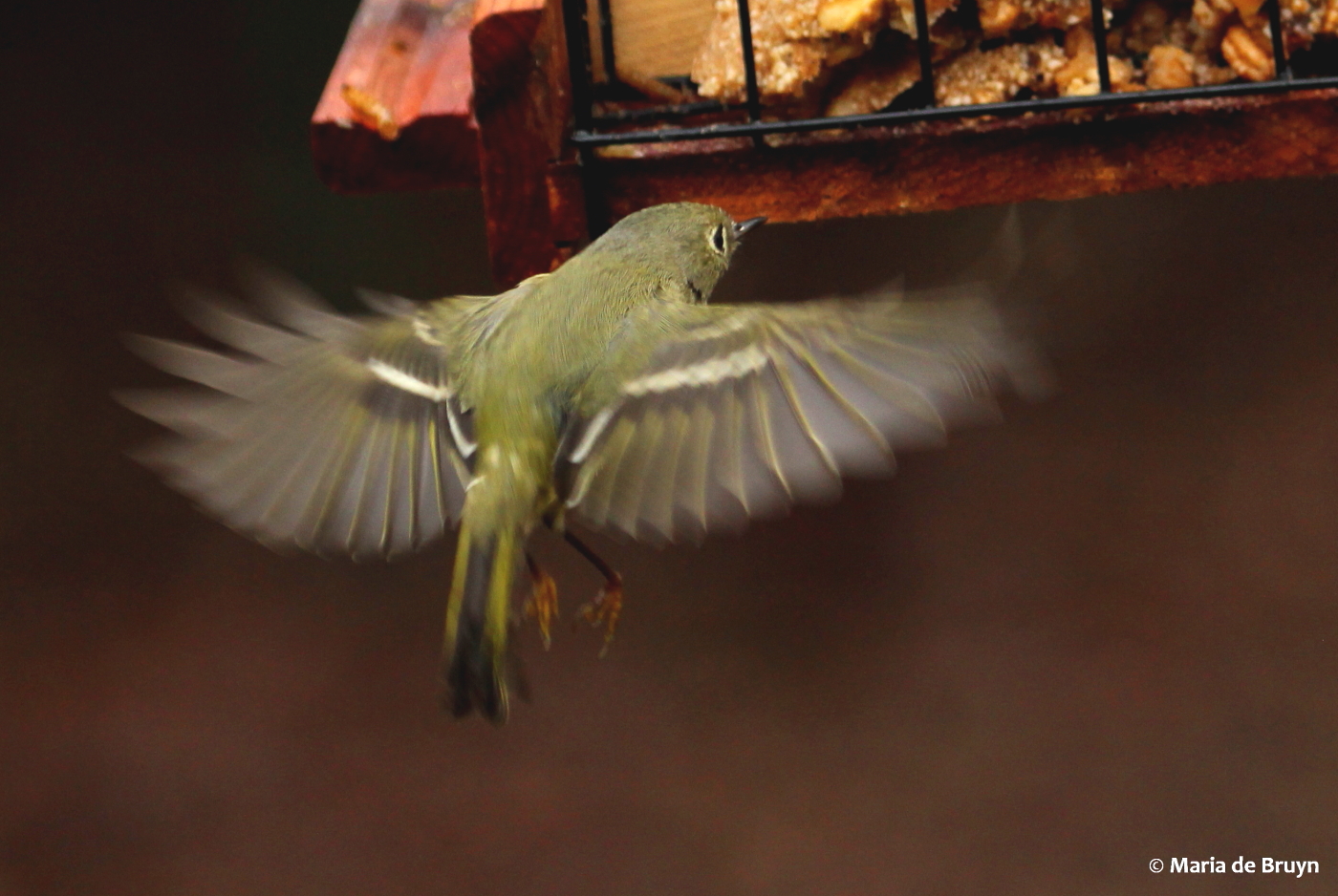

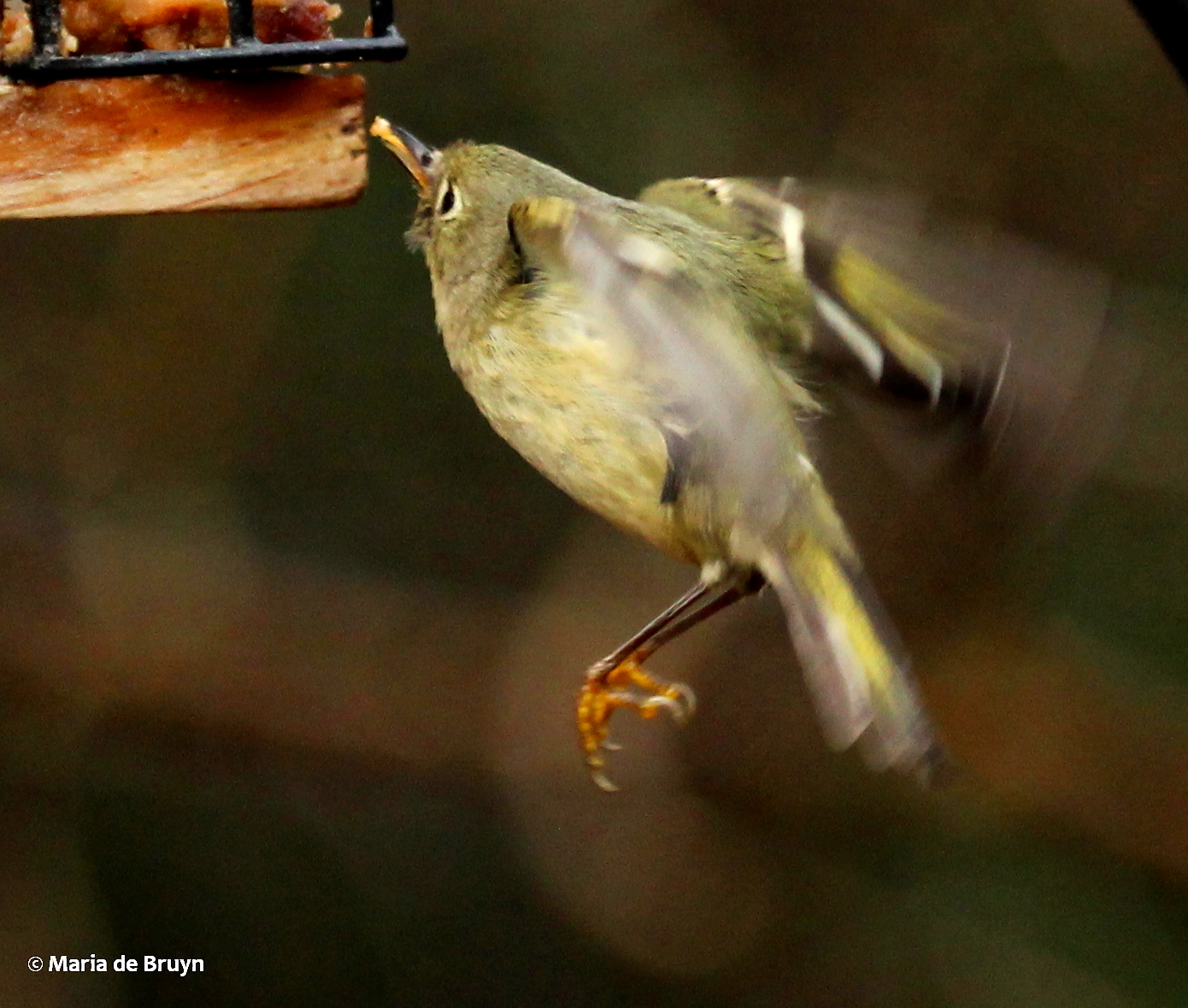

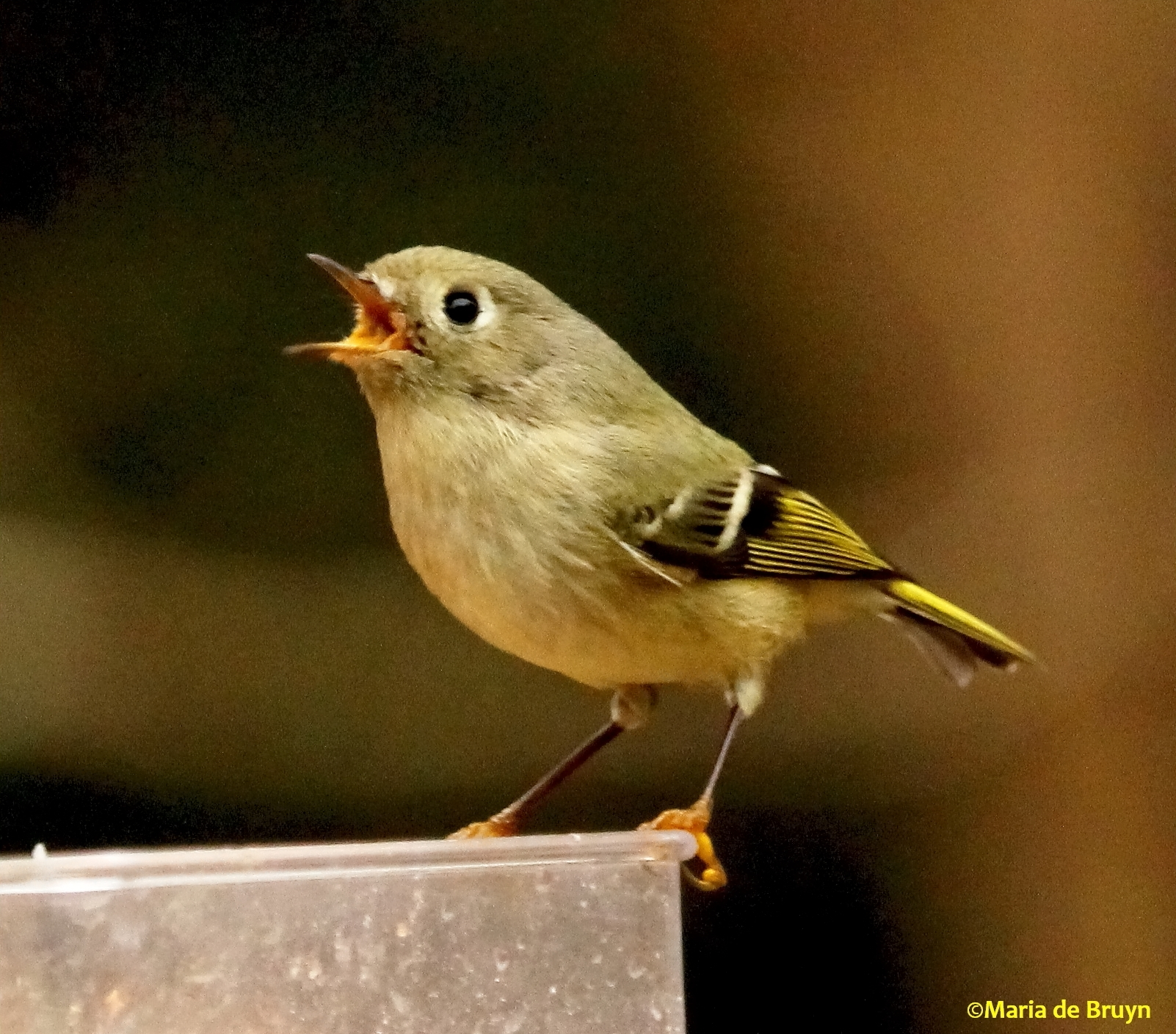

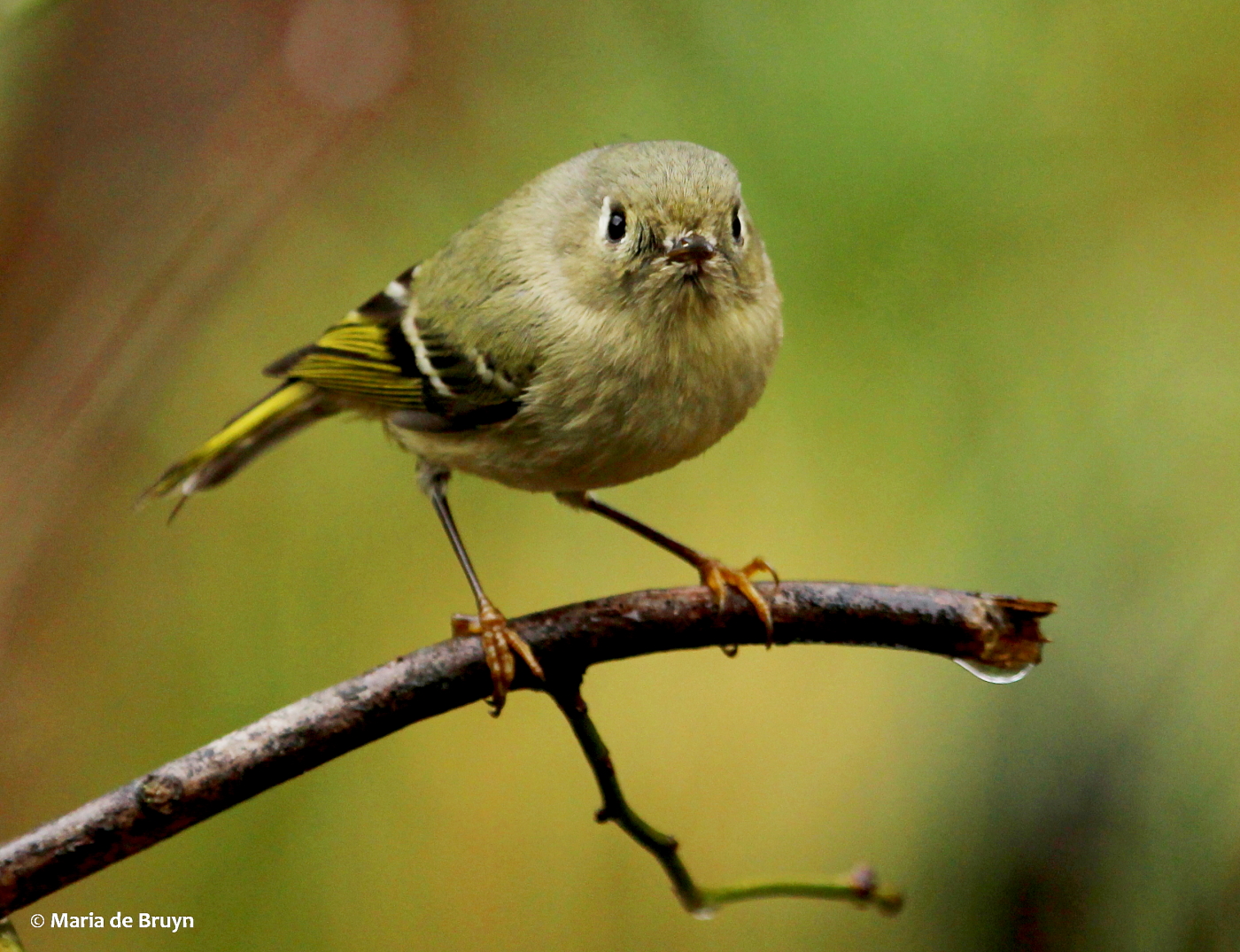







 While ospreys are one of my favorite large birds, the gorgeous ruby-crowned kinglet (Regulus calendula) has won my heart among my tinier feathered friends. Today I’m sharing some portraits of kinglets made the past couple months (in my yard and at Bolin Creek greenway in Chapel Hill, Jordan Lake woods, Sandy Creek Park in Durham).
 hes or 10-11 cm long), this kinglet is in almost constant motion, which makes getting good portraits a bit of a challenge. Despite this high level of activity, however, research has shown that the ruby-crowned kinglet only uses up to 10 kcal a day in energy. (Sometimes I think this holds true for me as well as the weight I want to lose just stays in place.)
 Their main diet consists of insects, including spiders, ants, wasps, beetles and aphids. They will also occasionally eat seeds, fruit and sap.


 Most of the time, the male’s beautiful little red crest (which gives the species its name) remains hidden unless it gets excited about something.


 In my pursuit of portraits, I’ve found that just as I think I have the bird in focus, it has disappeared from my viewfinder and I need to look up and around to locate it again..Given its diminutive size, one wouldn’t expect that the female lays up to 12 – twelve! – eggs in its nest, which is elastic and can expand as the brood grows. The male and female stay together until the chicks fledge at about 2 months and they will defend the nest against intruders.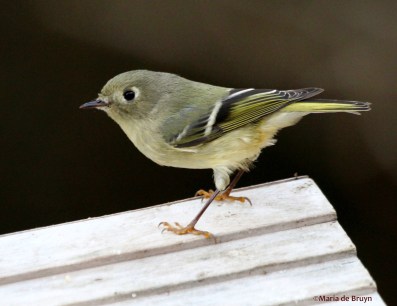
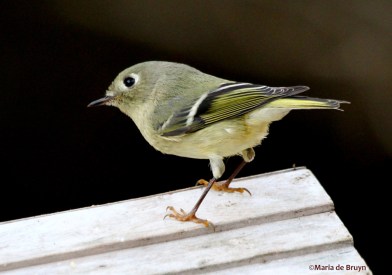
 Sometimes, I hear the chittering call before I see the tiny wonder and only very rarely get to enjoy its longer
  What is very cool for me is that my visitor can become very friendly indeed. Last year, on two occasions, I was carrying a replenished suet feeder outside when the kinglet flew in to perch on it as I held the feeder in my hands – giving me a great close-up view. I look forward to seeing if the kinglet will favor me with an up-close-and-personal meeting again this coming winter!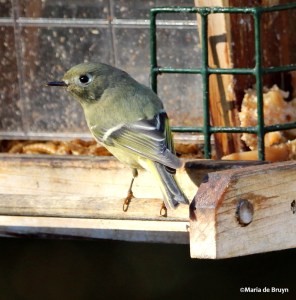
 My beautiful world